Showing posts with label medicare. Show all posts

Thursday, September 1, 2016

Questions for Safley Remaining At Home

Making the decision to start an elder care journey with your aging parent can be a life-changing choice. When you make this decision you are committing yourself to giving of your time, energy, and effort to ensure that your parent's needs are met in the way that is best for them. Your role as his family caregiver also means that you are going to focus on keeping them as safe, secure, and independent as possible in their home. This means that one of the first things that you should do when starting your care arrangement is performing a safety check throughout his home.

Doing a home safety check throughout your parent's home allows you to identify areas that might be risky for your senior, or that you can modify to improve safety and accessibility. Remember that the safety and accessibility needs of an elderly adult are different from those of a young adult, making it necessary for you to evaluate the safety of the space in the context of his particular needs.

Use these questions to guide you as you move from room to room throughout the home checking the safety of the space and coming up with ideas for meaningful modifications:

Outside
    Are the handrails secure and properly installed?
    Can your parent safely and comfortably get up and down any steps that lead into the home?
    Would a ramp help your parent access the home more easily?
    Can your parent safely and comfortably open the door?
    Is the lock system on the door secure and adequate, particularly if your parent has wandering tendencies?
    Is the walkway clear and safe without any obstacles, loose areas, or other problems that could increase fall risk?

Living Room
    Is the lighting sufficient for your parent's vision needs?
    Is the furniture arranged in such a way that it is safe and easy to get around the room?
    Are there no loose or unsteady pieces of furniture around that may cause a serious fall if your parent attempted to use it for balance?
    Are there electrical cords across walking areas that could create a tripping hazard?
    Are there loose floor coverings such as rugs that could create a tripping hazard?
    Is there a smoke detector close by?

Bathroom
    Are there grab bars in place to help with balance and mobility?
    Is the toilet paper close enough to the toilet so that he does not need to reach such that he might lose his balance and fall?
    Can your parent get into and out of the shower or bath safely and confidently?
    Might a walk-in tub make the bathroom safer and more accessible to promote greater independence for your loved one?
    Is the faucet properly marked to reduce scald risks?

Bedroom
    Can your parent get into and out of the bed safely?
    Are the windows properly locked, particularly if your parent has wandering tendencies?
    Is there a smoke detector nearby?
    Is there a carbon monoxide detector nearby?

Kitchen
    Are the appliances in good working condition?
    Are large or heavy items stored too high off the ground?
    Can your parent safely utilizes the small appliances such as the coffee maker?
    Are sharp implements stored safely and securely?
    Is there a fire extinguisher easily accessible?

Remember to approach this topic gently, and if there's is strong resentment, try spreading it out over time.

Monday, March 28, 2016

Purchasing A Medical Alert System - Part 3

What follows is Part-3 of a 4-part series that will explain the variations in medical alert products and what you should know before you buy...

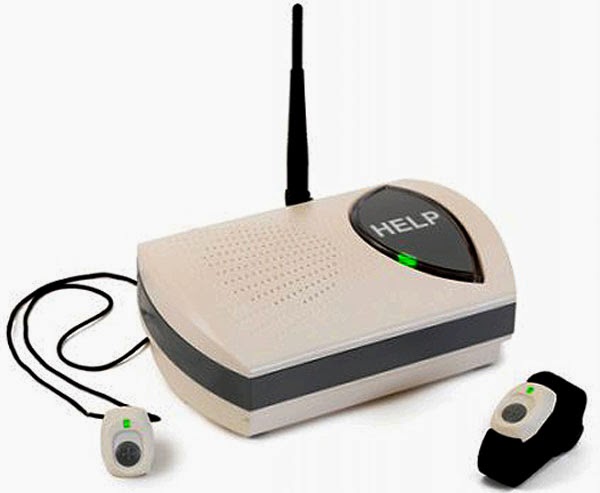
 We continue our multi-part series on Med Alert systems with explanations of options and features that one should understand before making a purchase.  As you'll recall, we previously mentioned that our standard system has a button which is worn by the user, has a range of about 300' on average, and will contact our monitoring center when the button is pressed.  But what other options are available? In Part-3 we'll highlight a few of the most popular:

1) Critical Information Forwarding.  All of our Direct Link products have the option of forwarding critical information to the emergency responders. For instance, if someone is on a complex drug regimen, or under treatment for an illness, our units can provide that information to the responding agency.  In addition, if there is a hidden key outside of the home that will allow easy entry, the responders will be informed of where to find it!  This is a great feature when you consider that when emergency responders arrive at a locked home, they will typically break a window or door to gain access. Knowing that a key is available to enter the dwelling is invaluable. BTW, this is a free option on all Home Helpers Direct Link products!

2) Fall sensing. This should be a consideration for any person that is a fall hazard. In this case, the button has a small sensor in it that will detect when a client falls.  It will then automatically activate an emergency alert request without additional intervention from the user.  Fall sensing will typically add a small cost to the monthly rate, but for someone who is unsteady, it is well worth the expense.

3) 2-Way Pendants.  With a standard alert system, after sending an alert, the user will speak to the call center through the base unit. If they are too far from the base to converse, the next action would typically be to dispatch emergency responders. 2-Way Pendants allow the user to speak through the pendant! Also, these units typically have more range than a standard pendant, continuing to function up to about 600 feet from the base.  This is a good choice for someone who likes to be out of the home, but is still in the neighborhood.

4) Mobile Units. A mobile medical alert uses a cellular network to communicate with the monitoring center, and incorporates a built in GPS receiver. This allows the user to travel anywhere there is cellular coverage, and if help is needed, the GPS will identify where they are located. Assistance can then be dispatched to that location!

With the exception of #1 above, adding options tends to increase cost. If the option is not really needed or provides some value, then the buyer should consider saving that money! Besides, upgrades can be made at any time.

Bringing useful news to educate our clients is one more way that Home Helpers has been making life easier for over a decade.  Call us today at 704-909-7958.  And as always, you can find us on our websiteFacebook and

Wednesday, March 16, 2016

Life line medical alert systems, what you should know. - Part I

What follows is Part-1 of a 4-part series that will explain the variations in medical alert products and what you should know...

No one wants to lose their independence. The freedom to live comfortably where one chooses is something that no one wants to forfeit.  However, it can be difficult to maintain independence and retain the peace-of-mind of knowing you're safe. So how do we remain independent and protected at the same time?

The best solution to this problem is a life line Medical Alert unit from Home Helpers. This is a device that allows people to live independently in their own homes while still remaining protected from the various hazards that can arise when living alone or when living with various mental or physical impairments. Choosing the right medical alert system can be a difficult and stressful decision. What features do you really need? What should I look for? How does it work?  What is the cost?  It can be daunting to get started, but don’t worry, we can guide you to the best decision.

First, the basics.  A medical alert system consists of two fundamental components.  They are
1) A pendant which is worn around the neck or wrist, and
2) A base unit that receives the signal from the pendant when the pendant's button is pressed. 
When the pendant is activated, the base unit will contact a monitoring location, and trained personnel will speak with you to determine if you have an emergency.  Since the pendant can be activated accidentally, this allows the emergency personnel an opportunity to determine if there is a real problem. Also, we encourage our clients to press the button on a regular basis so that they are familiar with how it works, and to confirm that it is operating normally.

There are lots of variations to the above mentioned fundamentals, and despite what some vendors advertise, one size does not fit all!  We'll cover some of those differences in our next posting.  In the meantime, if you would like to know more about these products, feel free to give us a call.  We'll be glad to explain more and assist you.

Bringing useful news to educate our clients is one more way that Home Helpers has been making life easier for over a decade.  Call us today at 704-909-7958.  And as always, you can find us on our websiteFacebook and

Wednesday, March 2, 2016

Recognizing Alzheimer's Symptoms

A common question with regards to  Alzheimer's Disease is 'what are some common symptoms?'  Knowing common signs of the disease can be beneficial in that treatment can begin at an earlier stage.  While there is currently is no cure, as with any illness, the earlier it is addressed generally the better the outcome.  With that in mind, the Alzheimer's association has published a great list of common signs and symptoms, and even included notes on how these differ from someone experiencing simple forgetfulness as they age!  Check out this online PDF from alz.org.  And if you think you or someone you know may be starting to experience any of the 10 warning signs, see your physician!

Bringing useful news to educate our clients is one more way that Home Helpers has been making life easier for over a decade.  Call us today at 704-909-7958.  And as always, you can find us on our websiteFacebook and

Wednesday, January 20, 2016

Alzheimer's and Sleep

There's growing evidence that a lack of sleep can leave the brain vulnerable to Alzheimer's disease.  According to the Oregon Health & Science University, the brain appears to clear out toxins linked to Alzheimer's during sleep.  And, at least among research animals that don't get enough solid shut-eye, those toxins can build up and damage the brain.  It has been clear for decades that there is some sort of link. Also, sleep disorders are very common among people with Alzheimer's disease.

If the University is correct and they are able to prove the above hypothesis, it will strengthen the argument that a lack of sleep can lead to Alzheimer's disease. It might also provide a way to identify people whose health is at risk because they aren't getting enough deep sleep, and it could pave the way to new treatments.

So there's no better reason to get a good nights sleep!

Bringing useful news to educate our clients is one more way that Home Helpers has been making life easier for over a decade.  Call us today at 704-909-7958.  And as always, you can find us on our websiteFacebook and

Wednesday, December 2, 2015

Outbursts From Dementia Sufferers

We frequently see families caring for a loved one that is suffering from dementia and struggling with outbursts of anger. This is particularly true of those who are in the more advanced stages. Knowing what triggered the behavior, and how to react in the moment of a verbal outburst can help you cope. Finding the trigger to the outburst is not always easy. Remember that someone with advanced stages of dementia may be unable to recognize or communicate their needs easily. Also, they may have difficulty understanding what behavior is acceptable.

Most often the cause of the outburst will fall into one of three categories:
1. Physical:  Issues such as discomfort, pain, illness, improper medication or difficulty hearing. Consult with a physician and ask if they can help determine which of these may be ruled out.
2. Social:  Unfamiliar surroundings, boredom, loneliness, crowds, or embarrassment from having someone repeatedly pointing out they you have already answered a question.  Though not all of these scenarios can be controlled, if you understand the issue you can address the behavior in a more knowledgeable way.
3. Psychological: Challenges such as memory loss, fear, anxiety, or losing touch with reality.  All of these can lead to misunderstandings, misconceptions and difficulty communicating. Again, knowing the cause can help you take command and alleviate the problem.

What should you do when your loved one has an outburst? First, take a deep breath and remain calm. Raising one's voice or arguing will only elevate the situation.  Always reply in a calm, reassuring voice, maintain eye contact, and do not show any anger or alarm. Acknowledging the sufferer's feelings will tend to diffuse any anger they may be feeling. Finally, redirection to something that the dementia sufferer enjoys is very effective.  Things like music, laundry folding, watering plants, games, or any activity that makes them feel productive and happy will tend to move their disposition towards a more upbeat mood.

Bringing useful news to educate our clients is one more way that Home Helpers has been making life easier for over a decade.  Call us today at 704-909-7958.  And as always, you can find us on our websiteFacebook and

Tuesday, October 13, 2015

Protecting Seniors from Financial Abuse

 In broad terms, Senior Financial Abuse can be defined as the illegal or improper use of property or assets of anyone over the age of 60. 
 Some examples of this type of abuse can include identity theft, credit card fraud, abuse of Power of Attorney, deed theft, or using influence to receive cash or assets.  While we usually think of strangers committing this sort of abuse, it can also come from friends or family members.  Seniors are frequent targets primarily due to their lack of awareness of scams, or because they become more withdrawn and depend on another person that they see as trustworthy.  It's the latter reason that results in abuse stemming from family or other acquaintances.  This sort of abuse typically goes unreported owing to fear of the perpetrator, or due to embarrassment that they were taken advantage of.

How can you tell if someone you know is being financially abused?  The following are common warning signs to look for:
- Changes in typical spending habits.  Do you see account balances declining suddenly?
- Transferring assets to 'help a friend'.
- Checks made out to 'Cash', strange payments, or unfamiliar signatures.
- Large or unexplained withdrawals or transfers.
- Bills suddenly stacking up and not being paid.
- Unable to produce statements from financial institutes.
- A friend or family member that tries to isolate a senior from others. 

 Since financial abuse often correlates to isolation, it's important to make sure that regular social interaction with varying acquaintances occur on a regular basis.  Also, offer to accompany a senior to visit any professional advisers to make certain they understand any advice or changes that are planned. If you suspect financial abuse, but don't know what to do, visit the National Adult Protective Services Agency website.  This site can direct you to local agencies throughout the US that can assist you in finding the help you need.

Bringing useful news to educate our clients is one more way that Home Helpers has been making life easier for over a decade.  Call us today at 704-909-7958.  And as always, you can find us on our websiteFacebook and

Friday, September 25, 2015

A Change of Seasons

 The arrival of fall signals colorful leaves, shorter days, and the approach of cooler weather.  If you have senior family members or friends, you may have noticed when you visit that the home usually feels warm to you.  It's normal as we age to prefer warmer living quarters. But what can be done to keep a loved one comfortable and at the same time safe?
  First,  you’ll want to arrange to have the home furnace and heating system serviced by a professional.  They should confirm that a unit which has been dormant for a while will operate normally and at at peak efficiency. If possible, have them inspect heating ducts and registers, as well as humidifiers, to make sure the air circulating in your home is clean.  This is an excellent time to get all filters changed out also.
 If there is a fireplace, it’s important to clean and inspect it before using it again, as well as confirm the chimney is in operational condition.  For fireplaces with gas logs, most gas utilities will be able to provide this service and verify proper operation.
  Electric blankets and heated rugs or mats are also popular.  Prior to turning these on, take a moment to give a close inspection.  Frayed cords, worn areas, loose or damaged switches, etc., are all reasons to have the item replaced.
  Finally, small space heaters are popular with seniors as they provide local and directed warmth.  They are also one of the number one causes of house fires.  If space heaters are in use, make certain they are in good condition, that all built in safety devices are working (ie: tip-over cutoffs, carbon monoxide sensor, etc.), and that they are not close to drapes.  If unsure, have it checked by a professional or simply replaced.
  A few moments of attention to these small details can provide a wealth of improved safety and comfort for friends and loved ones.

Bringing useful news to educate our clients is one more way that Home Helpers has been making life easier for over a decade.  Call us today at 704-909-7958.  And as always, you can find us on our websiteFacebook and

Friday, September 11, 2015

The Sandwich Generation

Have you ever heard of the term "Sandwich Generation" and wondered what it meant?  Or do you find yourself dealing with some very real challenges as a result of being a member of this group?   Mediastorm has recently released a video that documents one family's challenges of being a member of the Sandwich Generation.  Their movie trailer on this topic is well made and heart touching.  Take a few minutes to view it.  If you, or someone you know is struggling to deal with the same issues you'll see in the video, give us a call.  We'll be happy to help...


Bringing useful news to educate our clients is one more way that Home Helpers has been making life easier for over a decade.  Call us today at 704-909-7958.  And as always, you can find us on our websiteFacebook and

Thursday, July 30, 2015

VA Benefits - Aid & Attendance

 Hardly a week goes by that our office doesn't get a call from the family of a veteran needing care.  When these calls come in, the first question we ask is
"Have you inquired about Aid & Attendance?".  Almost without fail, the answer is "No, what's that", "We don't quality", or "We applied but never got anything".  Unfortunately, lack of knowledge about the benefit is what usually leads to these answers.
  So, what is the Department of Veterans Affairs Aid & Attendance benefit?  To quote, "The Aid and Attendance Pension provides benefits for veterans and surviving spouses who require the regular attendance of another person to assist in eating, bathing, dressing and undressing or taking care of the needs of nature. It also includes individuals who are blind or a patient in a nursing home because of mental or physical incapacity, as well as assisted living facilities". Information on the benefit can be found by clicking on this link to the US Dept. of Veterans Affairs Website.
   Even with the information found on the web, what the benefit consists of, and how to apply, are not clear.  And that's where we can help.  As part of our commitment to give back to our Veteran's, Home Helpers of LKN & Central NC is dedicated to assisting families in navigating the process to apply for this pension. Simply give us a call and we will gladly offer instructions on what you need to do.  The benefit is well worth the effort to apply, it only takes a few minutes, and there is zero cost involved.
 Finally, if you're a veteran or spouse needing care, and you don't apply for this benefit, it's a sure bet that you'll never get it!

Bringing useful news to educate our clients is one more way that Home Helpers has been making life easier for over a decade.  Call us today at 704-909-7958.  And as always, you can find us on our websiteFacebook and

Monday, July 20, 2015

Tips for Renovating a Home for Aging in Place

If your family isn’t dealing with the challenges of a family member’s aging needs now, chances are you will be soon. With the number of old projected to outnumber the young by the year 2020 for the first time in history, taking care of the elderly (if only our own elderly selves) is something most of us will be faced with. Nearly 90% of seniors say they want to live at home for as long as possible, so making your home accessible now is in your best interest.  With that in mind, we'd like to offer 8 quick tips to accommodate aging at home...

1) Install grab bars in the shower. All bathrooms can benefit from the added security a grab bar provides. Be wary of the suction type when attaching to tile.  The tiles don't always provide a secure anchor point, and can pull from the wall!!!
2) Install a shower seat.  A foldable shower seat can give a needed rest, and can be stowed away when not in use.
3) Replace doorknobs with lever handles. Lever handles are much easier to operate than traditional doorknobs for those with arthritis and other hand ailments.
4) Replace traditional light switches with rocker or touch switches. As with doorknobs, a traditional toggle switch can be too small to handle, or even too small to see. A rocker or touch style is much simpler to operate.
5) Use easy-to-operate hardware for windows. Everyone needs fresh air once in a while, but some windows are harder to open than others. You may want to research the pros and cons of different window hardware options.
6) Install recessed lighting that illuminates cabinets and countertops. Installing task lighting to brighten workspaces in kitchens, laundry rooms and closets is a great way to improve living spaces for elders.
7) Install lever handles for sink faucets. Lever handles on sink faucets make them easier to operate for all users.
8) Install sensor lighting at each entry. This is a good safety feature for any house, but can especially help older occupants with impaired nighttime vision feel secure at home.

Most all of the above products can be found in local home-improvement stores.  And if you're not up to doing it yourself, ask the store if they have contractors that can help.

Bringing useful news to educate our clients is one more way that Home Helpers has been making life easier for over a decade.  Call us today at 704-909-7958.  And as always, you can find us on our websiteFacebook and

Tuesday, June 30, 2015

Medication Safety For Seniors

Did you know that seniors 65 and older, represent approximately 14% of the population but consume 40% of prescription medications and about 35% of all over the counter meds? The average number of medications a senior takes is between 12 and 18 prescriptions a year. That is a lot of medication to manage. Adverse drug reactions and non-compliance with medications is one of the leading causes for hospitalization in the elderly. With these statistics it’s important to make certain we are doing all we can to keep our seniors safe at home.

Some things to remember:
- Keep an updated list of your medications, dose and frequency in your wallet. Don’t forget to add any new medications
- If prescribed a new medication make certain to understand the name of the drug and its purpose
- How long to take the medication and side effects or warnings associated with the drug
- Fill prescription medications at the same pharmacy, their computer software can alert the pharmacist to any contradictions
- Over the counter medications should be discussed with a physician, some non-prescription meds can be potentially harmful

For those having trouble managing their medications we offer several options to assist.
- Direct Link medication dispensers,
- Nurse visits to help manage medications
- Employees escorting seniors to doctor appointments can bring current med list for the MD to review
Lastly, we can be in the home when family can’t, to remind seniors how important it is to take their medications as prescribed.

Bringing useful news to educate our clients is one more way that Home Helpers has been making life easier for over a decade.  Call us today at 704-909-7958.  And as always, you can find us on our websiteFacebook and

Monday, June 15, 2015

Remember Dad on Father's Day

A quick poem to remember dad...

 Daddy, I love you
 For all that you do.
 I 'll kiss you and hug you
 'Cause you love me, too.

 You feed me and need me
 To teach you to play,
 So smile 'cause I love you
 On this Father's Day.
     Author Unknown


Bringing useful news to educate our clients is one more way that Home Helpers has been making life easier for over a decade.  Call us today at 704-909-7958.  And as always, you can find us on our websiteFacebook and

Friday, May 29, 2015

Alzheimer's disease and good health practices

Recently, several news networks have carried articles on Alzheimer's prevention recommendations.  While these health conditions are not definitive, and certainly not guaranteed to prevent the disease, they all seem to have a direct connection back into patients that suffer from Alzheimer's.  With that in mind, here are the top 7:


1. Too little exercise

Not enough physical activity is the number one preventable factor that contributes to Alzheimer's cases. About one third of the U.S. population is sedentary, so the highest risk factor is also dangerously common - time to get up and move.
2. Depression
Depressed? Maybe it's time to seek treatment - 15 percent of Alzheimer's cases may stem from depression.
3. Smoking
Need another reason not to smoke? Smoking accounts for 11 percent of Alzheimer's cases.
4. High blood pressure
How's your blood pressure? Keep it in check - 8 percent of Alzheimer's cases are linked to mid-life hypertension.
5. Obesity
Packing on the pounds as you pile on the years? Midlife obesity accounts for 7 percent of Alzheimer's cases in the U.S.
6. Idle mind
Time to go back to school - or to pick up a crossword puzzle!  Lack of cerebral exercise - or simply not using your brain enough - accounts for 7 percent of Alzheimer's cases in the U.S.
7. Diabetes
Problems with blood sugar control kick off the list of modifiable risk factors for Alzheimer's. The study suggests that 3 percent of Alzheimer's cases in the U.S. are linked to diabetes.

You may notice that these tips are pretty much basic good health practices.  So add that as another good reason to consider correcting any of the above problems!

Bringing useful news to educate our clients is one more way that Home Helpers has been making life easier for over a decade.  Call us today at 704-909-7958.  And as always, you can find us on our websiteFacebook and

Monday, May 11, 2015

New Scam Alert!

We've had several reports lately of a new scam that targets senior citizens, and this one even hit the
parents of staff in our office!  Here's how it works...

A phone call comes in to a senior, and the caller claims to be a child, grandchild, niece/nephew, or a similar type of relative.  In all of the cases we've heard of, the caller used the actual relative's name.  They then go on to say that they are in jail and need bail money to get out.  The caller then claims that the local police sergeant will explain how to send the money, and hands the phone over to the "sergeant".   This person states that the only way the incarcerated child/grandchild/etc can be released is if a credit card is provided to process the bail charge.

Obviously, this is all a scam that's intended to play on the caring hearts of a grandparent.  And while it may seem transparent when you read this, a senior that's not tech savvy or familiar with these types of ploys is likely to try to help get their child/grandchild/etc out of jail!

How are the scammers getting personal information?  Most likely from social media sites, and it's then a simple process of looking up phone numbers.  Remember, these sites are constantly trying to be hacked and personal information is often leaked!  Please share this story with family members, be cognizant of what you post online, and NEVER give a credit card to a caller!

Bringing useful news to educate our clients is one more way that Home Helpers has been making life easier for over a decade.  Call us today at 704-909-7958.  And as always, you can find us on our websiteFacebook and

Thursday, May 7, 2015

Remember Mom on Mothers Day

We stumbled across this poem from an anonymous author, and thought it fitting to share in honor of
moms everywhere on Mother's Day...

  You filled my days with rainbow lights,
  Fairytales and sweet dream nights,

  A kiss to wipe away my tears,
  Gingerbread to ease my fears,

  You gave the gift of life to me,
  And then in love, you set me free,

  I thank you for your tender care,
  For deep warm hugs and being there,

  I hope that when you think of me,
  A part of you, you'll always see.


 Motherhood is not an easy job, but moms everywhere gladly accept the responsibilities. Remember your mom on mother's day.  And if she ever needs help, give us a call.  We'll be happy to do anything we can to assist and honor her.

Bringing useful news to educate our clients is one more way that Home Helpers has been making life easier for over a decade.  Call us today at 704-909-7958.  And as always, you can find us on our websiteFacebook and

Tuesday, May 5, 2015

Allergy Season is Upon Us!

We've left winter, and the accompanying flu season, for spring and allergies!  The Asthma & Allergy Foundation of America (AAFA) declares May to be National Asthma and Allergy Awareness Month. It's peak season for asthma and allergy sufferers, and a perfect time to educate family, friends, co-workers, etc., about this malaise.

There is no safe place from allergies in America, and some cities are more problematic than others.  The "Allergy Capitals" is an annual research project to identify the "100 most challenging places to live with allergies".  This year, Louisville, KY landed in the #1 spot, a move up from fifth last year.  If you're curious to know where your city ranks, visit www.AllergyCapitals.com.  There's a list on this site of the top 100 most challenging places to live with allergies.

What to do if you are a sufferer?  http://www.webmd.com offers some suggestions:
  1. Leave your shoes at the door. When you come home from the outside, taking your shoes off at the door lessens the amount of pollen you track into the house. Wipe down your dog's coat before he comes into the house, too, because pollen clings to fur.
  2. Wash your hair before bed. If you're a morning shampoo person, consider switching to shampooing and showering before bed instead. That way, pollen that collected on your hair during the day won’t rub off on your pillow.
  3. Close up the house. Open windows can be refreshing, but they let in pollen.
  4. Use the ''recirculate" option in the car. Keep windows and sunroofs closed. Especially on high-pollen days, recirculate the air in your car instead of using the vent, which may let in pollen.
  5. Service the filters in your furnace and air conditioner. Change them at the intervals recommended by the manufacturer, or more frequently if it seems to help.
While these tips won't cure you of allergy issues, they will help to mitigate the problem.  And every little bit helps!
Bringing useful news to educate our clients is one more way that Home Helpers has been making life easier for over a decade.  Call us today at 704-909-7958.  And as always, you can find us on our websiteFacebook and

Wednesday, April 15, 2015

Customer Service, a true story!

  On a recent morning, a client that uses our emergency alert system called to say the alert button had stopped working. Our agency advises clients to regularly test their system to confirm proper function and to provide familiarity with how the units work.  The button had been tested that day and seemed to be intermittent. Since we supply two buttons to our clients, we advised him to use the 2nd button, and that we would be out after lunch to replace the non-functioning button.  We also advised him to test the 2nd button while we were speaking on the phone.  He did this, and it worked properly.

That afternoon, when our employee arrived at the client's home to replace the alert button, a rescue squad came up as he was entering the building.  Not knowing what was going on, he held the door open as they zipped into the building, down the hall, and around the corner.  He then proceeded to the clients condo, only to find that was where the rescue squad had gone!

It seems that only a few minutes earlier, the client had fallen.  While not injured, he was unable to stand, and had activated the alert button.  The rescue squad helped him back to his feet, and verified that all was ok.  Prior to leaving, several of the squad members commented on how easy it was to find the client as they were given instructions as well as an address, and they didn't have to break in as they were given information on gaining access as well!

So, if you step back and review this story, you'll see a lot of benefit for this client from our agency.  IE:
 1. A local number, and person, to call when there is an equipment problem.
 2. Same day support & repair from the same local office.
 3. When needed, emergency responders are given detailed data on the person in need.
 4. Quick response tailored to the client.
 5. A human came to the home to help with the problem.  No mailing, return shipments, dealing with offshore call centers, etc.
 6. Same cost, or cheaper, with better products, service, & support than competitors.

There's obviously more benefits, but knowing the above 6, it's hard to imagine anyone going elsewhere for this type of service!  We challenge you to put us to the test.  Call our office to learn more at 704-909-7958.

Bringing useful news to educate our clients is one more way that Home Helpers has been making life easier for over a decade.  Call us today at 704-909-7958.  And as always, you can find us on our websiteFacebook and

Thursday, March 19, 2015

Drug Management

According to the CDC, more Boomers died of overdoses in 2013 than from car accidents, the flu, and pneumonia combined.  The Wall Street Journal reported  recently that this death statistic is expected to worsen as Boomers bring drug-using habits into old age with them to cope with everything from pain to declining functional ability.  Old habits and new challenges tend to not mix well in this situation.

As the article tells us, this group is in the midst of a perfect storm - the collision of the first generation with a predilection of mind-altering substances and record high rates of opiod painkiller abuse.

We find ourselves frequently working with families who are coping with a loved one with some sort of substance abuse, or with complex drug needs that are difficult to manage.  One solution for drug management is our electronic dispenser that provides the proper dose at the correct time.  Since it's a monitored solution, if the dosage isn't taken, the unit notifies us so that we can follow up with a phone call.  This allows us to confirm if the client is ok and they simply missed the alert, or if there's a problem that needs attention.  It's an affordable solution to an issue that can be challenging.  For more information, feel free to call our office.

Bringing useful news to educate our clients is one more way that Home Helpers has been making life easier for over a decade.  Call us today at 704-909-7958.  And as always, you can find us on our websiteFacebook and

Wednesday, March 4, 2015

Elder Abuse

  Every year, more than half a million American elders are abused or neglected according to Centers for Disease Control. The frequency of elder abuse may be greater as so many are afraid or simply unable to speak out about what is happening to them. In some cases, the abuse is limited to financial exploitation. In other cases, it may encompass neglect and physical cruelty.  Different varieties of elder abuse have different signals, some less obvious than others.  Here are some examples:

1- Neglect. This is commonly defined as withholding or failing to supply necessities of daily living to an elder, from food, water and appropriate clothing to necessary hygiene and medicines.
2- Abandonment. This occurs when a caregiver or responsible party simply deserts an elder – dropping them off at a nursing home, a hospital, or even a bus or train station with no plans to return. Hopefully, the elder has the presence of mind to call for help, but if not, a tragic situation will quickly worsen.
3- Physical abuse. Bruises and lacerations are evident signals, but other indicators are less evident: sprains and dislocations, cracked eyeglass lenses, impressions on the arms or legs from restraints, too much or too little medication, etc.
4- Emotional or psychological abuse. How do you know if an elder has been verbally degraded, tormented, or threatened in your absence, or left in isolation? If they aren't  willing or able to let you know about such wrongdoing, watch for signals such as withdrawal from conversation or communication, agitation or distress, and repetitive or obsessive-compulsive actions linked to dementia such as rocking, biting or sucking.
5- Financial abuse. When a relative, friend or other party uses an elder's funds, property, or assets illegally or dishonestly, this is financial exploitation. This may vary from withdrawing savings with an ATM card to forgery to improperly assuming power of attorney.

  Some people aim to exploit senior citizens. Others simply don’t recognize or respect the responsibilities that come with eldercare. Whether the abuse is intentional or not, the emotional, physical or financial harm done can be reprehensible. If you suspect abuse, but aren't sure where to turn, call us.  We'll be glad refer you to the correct resources.

Bringing useful news to educate our clients is one more way that Home Helpers has been making life easier for over a decade.  Call us today at 704-909-7958.  And as always, you can find us on our websiteFacebook and