Recently, lawsuits were launched against a large In Home Care company regarding their business practices. In a nutshell, the company acted like a 'Placement Agency', locating workers that would then act as caregivers in private homes. The workers would be paid directly by the client, and the Home Care Agency would bill the client for a finder's fee. It's also important to note that the agency would not be licensed as a Home Care provider.
In this scenario, the worker is actually a contractor working directly for the client, and not the Home Care company. This means that the client in essence has hired their own employee, and is responsible for all taxes, social security, insurance, etc., that must be filed with state and federal government. Even if the worker claims "1099 Contractor" status, all payments must be reported by the client, and the contract employee is liable for the payments. The Home Care company has no obligation to perform any of these duties. The lawsuits are claiming fraud, neglect, misrepresentation, and concealment of information to name a few.
Probably the biggest draw to this sort of agreement is that the hourly costs are lower, typically by about %20 when compare to a licensed Home Care Agency. However, when the liability of maintaining, reporting, and accurately managing the previously mentioned employee relationship is factored in, those savings are quickly lost. The reality is that liability & costs are easily higher.
At Home Helpers, all of our staff are employees of the agency. They have undergone background checks, receive recurrent training, and are covered by our insurance policies. As employees, all payroll requirements are covered by us. When shopping for care services, these are critical items to keep in mind! Be sure to look at the bigger picture!!! Visit us online at www.lknHomeCare.com to learn more about us and our services.
Bringing useful news to educate our clients is one more way that Home Helpers
has been making life easier for over a decade. Call us today at 704-909-7958. And as always, you can find us on our website, Facebook and Google+!
As the premier provider of quality In Home and Senior Care services, Home Helpers has been making life easier for clients for over a decade. We are dedicated to providing exceptional home care services to the greatest of generations... Yours. Call us today at 704-909-7958.
Thursday, July 24, 2014
Monday, July 7, 2014
Purchasing a Medical Alert Unit - Final Chapter
In the final installment of our series on Med Alert Systems, we'd like to offer a few quick tips on some of the items/features that are often overlooked in these systems. Remember, the ultimate goal is to make an intelligent purchase!
One question we hear frequently is what is the difference in a "911 Dialer" and a full Medical Alert systems. "911 Dialers" are typically available at drug stores, department stores, etc. They advertise a "One time fee", which is the purchase price, and no monthly fees. While these may look similar to a Medical Alert unit, they differ in that they have one function: Dial 911. On the surface, this may seem to meet the basic requirement. However, there are drawbacks to this type of device, not the least of which is the ability to test it on a regular basis without contacting the 911 emergency center. If it's not tested regularly, how can you confirm it's function??? In addition, this type of unit does not provide health information to the responders, nor does it allow for "lesser needs" calls, such as having a neighbor or family member be contacted for some reason.
Before making your purchase, you should ask where the monitoring center is located. During a crisis clear communication is crucial, and adding an off-shore accent to deal with can slow things down. Finally, on-going support & service are important. When you're depending on a device for emergency events, it's comforting to know that, if there is a problem, it's easily resolved. Local service is invaluable in this regard.
All of the units carried by our agency are installed & supported locally, our monitoring is provided by a CSAA 5-star U.S. center, and we're close by. Feel free to view the most popular units we have on our web site. If you have any questions, give us a call. We'll be glad to assist you in any way we can!
Bringing useful news to educate our clients is one more way that Home Helpers has been making life easier for over a decade. Call us today at 704-909-7958. And as always, you can find us on our website, Facebook and Google+!
Thursday, June 26, 2014
Purchasing A Medical Alert System - Part 3
We continue our multi-part series on Med Alert systems with explanations of options and features that one should understand before making a purchase. As you'll recall, we previously mentioned that
our standard system has a button which is worn by the user, has a range of about 300' on average, and will contact our monitoring center when the button is pressed. But what other options are available? In Part-3 we'll highlight a few of the most popular:
1) Critical Information Forwarding. All of our Direct Link products have the option of forwarding critical information to the emergency responders. For instance, if someone is on a complex drug regimen, or under treatment for an illness, our units can provide that information to the responding agency. In addition, if there is a hidden key outside of the home that will allow easy entry, the responders will be informed of where to find it! This is a great feature when you consider that when emergency responders arrive at a locked home, they will typically break a window or door to gain access. Knowing that a key is available to enter the dwelling is invaluable. BTW, this is a free option on all Home Helpers Direct Link products!
2) Fall sensing. This should be a consideration for any person that is a fall hazard. In this case, the button has a small sensor in it that will detect when a client falls. It will then automatically activate an emergency alert request without additional intervention from the user. Fall sensing will typically add a small cost to the monthly rate, but for someone who is unsteady, it is well worth the expense.
3) 2-Way Pendants. With a standard alert system, after sending an alert, the user will speak to the call center through the base unit. If they are too far from the base to converse, the next action would typically be to dispatch emergency responders. 2-Way Pendants allow the user to speak through the pendant! Also, these units typically have more range than a standard pendant, continuing to function up to about 600 feet from the base. This is a good choice for someone who likes to be out of the home, but is still in the neighborhood.
4) Mobile Units. A mobile medical alert uses a cellular network to communicate with the monitoring center, and incorporates a built in GPS receiver. This allows the user to travel anywhere there is cellular coverage, and if help is needed, the GPS will identify where they are located. Assistance can then be dispatched to that location!
With the exception of #1 above, adding options tends to increase cost. If the option is not really needed or provides some value, then the buyer should consider saving that money! Besides, upgrades can be made at any time.
Bringing useful news to educate our clients is one more way that Home Helpers has been making life easier for over a decade. Call us today at 704-909-7958. And as always, you can find us on our website, Facebook and Google+!
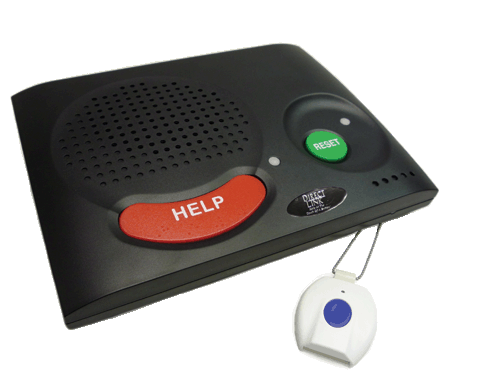
our standard system has a button which is worn by the user, has a range of about 300' on average, and will contact our monitoring center when the button is pressed. But what other options are available? In Part-3 we'll highlight a few of the most popular:
1) Critical Information Forwarding. All of our Direct Link products have the option of forwarding critical information to the emergency responders. For instance, if someone is on a complex drug regimen, or under treatment for an illness, our units can provide that information to the responding agency. In addition, if there is a hidden key outside of the home that will allow easy entry, the responders will be informed of where to find it! This is a great feature when you consider that when emergency responders arrive at a locked home, they will typically break a window or door to gain access. Knowing that a key is available to enter the dwelling is invaluable. BTW, this is a free option on all Home Helpers Direct Link products!
2) Fall sensing. This should be a consideration for any person that is a fall hazard. In this case, the button has a small sensor in it that will detect when a client falls. It will then automatically activate an emergency alert request without additional intervention from the user. Fall sensing will typically add a small cost to the monthly rate, but for someone who is unsteady, it is well worth the expense.
3) 2-Way Pendants. With a standard alert system, after sending an alert, the user will speak to the call center through the base unit. If they are too far from the base to converse, the next action would typically be to dispatch emergency responders. 2-Way Pendants allow the user to speak through the pendant! Also, these units typically have more range than a standard pendant, continuing to function up to about 600 feet from the base. This is a good choice for someone who likes to be out of the home, but is still in the neighborhood.
4) Mobile Units. A mobile medical alert uses a cellular network to communicate with the monitoring center, and incorporates a built in GPS receiver. This allows the user to travel anywhere there is cellular coverage, and if help is needed, the GPS will identify where they are located. Assistance can then be dispatched to that location!
With the exception of #1 above, adding options tends to increase cost. If the option is not really needed or provides some value, then the buyer should consider saving that money! Besides, upgrades can be made at any time.
Bringing useful news to educate our clients is one more way that Home Helpers has been making life easier for over a decade. Call us today at 704-909-7958. And as always, you can find us on our website, Facebook and Google+!
Monday, June 16, 2014
Purchasing A Medical Alert System - Part 2
In Part 1 of our series on Emergency Alert Units Explained (also know as life lines, life alerts, etc.), we covered the basics of what the units
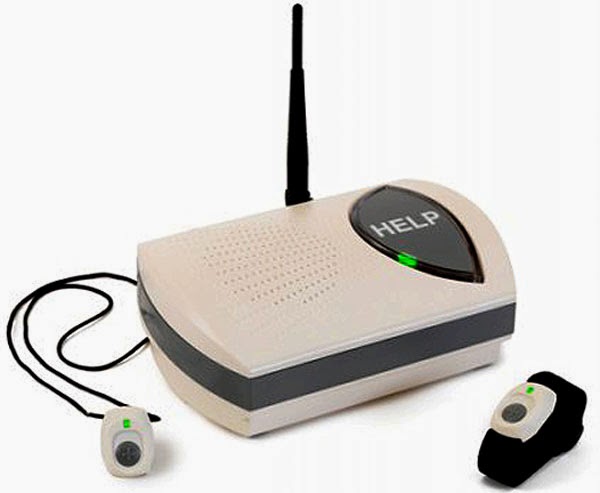
consist of, and what each piece does. In this part, we'll cover a few of the variations to the basics.
In most cases, when a user presses the 'Help' button on an alert unit, the device calls a monitoring office that will proceed to determine what the true need is. This historically took place over a telephone line. However, with the popularity of cell phones, not all users still have a traditional home phone. Alternatives are 1) Voice Over IP (VOIP) which travels over an internet connection. Providers such as Vonage, AT&T U-verse, Time-Warner Cable, Magic-Jack, or Comcast are examples of VOIP phone providers. For an alert unit to function properly with these requires a special digital unit. The second option is 2) a Cell Based unit which will make the call to the monitoring office over a cell network. By the way, the Cell Based unit operates completely independently of any cell phones or plans that you may have.
It's important that you choose properly here! If a regular phone line is available, then a standard phone emergency alert unit will provide the best reliability at the lowest cost. VOIP compatible devices will be slightly more expensive, and a Cell Based unit typically has the highest cost. However, if there's no home phone of any type, the cell based unit is obviously a good choice. Make certain that there is good cell coverage for the carrier that supports the unit where it will be used. Some rural areas that have sparse cell coverage can be problematic.
Prior to installing a cell unit for any client, our office always performs a search to determine how close the nearest cell tower is to the planned location of use. This assures our customers that a good signal is available and they will receive reliable service. We also test all of our units with the clients during the install to confirm proper operation, regardless of the type, and instruct them to repeat this test on a monthly basis. This will let them confirm ongoing proper operation so that in the event of an emergency, they can be confident that the unit will work!
In Part 3 of this series, we'll discuss features & options that are available with all of our Direct Link emergency alert devices. Many of these features set us apart from all of our competitors! In the meantime, you can view our most popular units by clicking here.
Bringing useful news to educate our clients is one more way that Home Helpers has been making life easier for over a decade. Call us today at 704-909-7958. And as always, you can find us on our website, Facebook and Google+!
Tuesday, June 10, 2014
Purchasing a Medical Alert System - Part 1
No one wants to lose their independence. The freedom to live comfortably where one chooses is
something that no one wants to forfeit. However, it can be difficult to maintain independence and retain the peace-of-mind of knowing you're safe. So how do we remain independent and protected at the same time?
The best solution to this problem is a Telephone Medical Alert unit from Home Helpers. This is a device that allows people to live independently in their own homes while still remaining protected from the various hazards that can arise when living alone or when living with various mental or physical impairments. Choosing the right medical alert system can be a difficult and stressful decision. What features do you really need? What should I look for? How does it work? What is the cost? It can be daunting to get started, but don’t worry, we can guide you to the best decision.
First, the basics. A medical alert system consists of two fundamental components. They are 1) A pendant which is worn around the neck or wrist, and 2) A base unit that recieves the signal from the pendant when the pendant's button is pressed. When the pendant is activated, the base unit will contact a monitoring location, and trained personnel will speak with you to determine if you have an emergency. Since the pendant can be activated accidentally, this allows the emergency personnel an oppotunity to determine if there is a real problem. Also, we encourage our clients to press the button on a regular basis so that they are familiar with how it works, and to confirm that it is operating normally.
There are lots of variations to the above mentioned fundamentals, and despite what some vendors advertise, one size does not fit all! We'll cover some of those differences in our next posting. In the meantime, if you would like to know more about these products, feel free to give us a call. We'll be glad to explain more and assist you.
Bringing useful news to educate our clients is one more way that Home Helpers
has been making life easier for over a decade. Call us today at 704-909-7958. And as always, you can find us on our website, Facebook and Google+!
something that no one wants to forfeit. However, it can be difficult to maintain independence and retain the peace-of-mind of knowing you're safe. So how do we remain independent and protected at the same time?
The best solution to this problem is a Telephone Medical Alert unit from Home Helpers. This is a device that allows people to live independently in their own homes while still remaining protected from the various hazards that can arise when living alone or when living with various mental or physical impairments. Choosing the right medical alert system can be a difficult and stressful decision. What features do you really need? What should I look for? How does it work? What is the cost? It can be daunting to get started, but don’t worry, we can guide you to the best decision.
First, the basics. A medical alert system consists of two fundamental components. They are 1) A pendant which is worn around the neck or wrist, and 2) A base unit that recieves the signal from the pendant when the pendant's button is pressed. When the pendant is activated, the base unit will contact a monitoring location, and trained personnel will speak with you to determine if you have an emergency. Since the pendant can be activated accidentally, this allows the emergency personnel an oppotunity to determine if there is a real problem. Also, we encourage our clients to press the button on a regular basis so that they are familiar with how it works, and to confirm that it is operating normally.
There are lots of variations to the above mentioned fundamentals, and despite what some vendors advertise, one size does not fit all! We'll cover some of those differences in our next posting. In the meantime, if you would like to know more about these products, feel free to give us a call. We'll be glad to explain more and assist you.
Wednesday, June 4, 2014
Care Payment Options
Paying for care can be challenging, especially if no previous plans were put into place. However, more and more, options are coming available that can help ease this challenge. Prior to making any decision, it's best to know what choices are available! Below are a few of the solutions we frequently see which are gathering a good deal of attention...
1) Life insurance buyout programs. This option involves the sale of a life insurance policy to a third party for a cash settlement. The money recieved can be utilized in any way one may need. For instance: in home care, assisted living, nursing home, medical bills, etc. There are several ways to leverage a buyout program, but the bottom line before taking this option is that one should compare the value of the payment versus the policy value, as well as opposed to other programs.
2) Life insurance conversion. Some insurance companies are now offering to convert a life policy into a long term care policy. This would allow payments to be made from the policy that would be based on the policy value. Not all companies offer this, and one should consider the trade off in policy value versus the cash payout.
3) VA benefits. If the person needing care is a military veteran, it pays to research if they would qualify for any sort of pension benefit from the Veterans Administration. Since this can be a complex task due to the various offerings and qualification requirements, it's highly recommended that you seek guidance before submitting any sort of application. There are numerous ways to do this, none of them requiring any up front fees.
4) Reverse mortgage. The Reverse Mortgage can be an excellent option when properly executed. As with VA benefits, it can be tricky and you will want to be comfortable that it's properly executed. Again, seek consultation.
The above options are all good possibilities when properly executed. The important thing to remember is to compare them all, and determine what the best selection would be that will maximize available finances for the longest period of time. Our office works with clients on these challenges all the time, and we have partnered with resources that can help make the selection as simple as possible. Feel free to call us to learn more at 704-909-7958.
Bringing useful news to educate our clients is one more way that Home Helpers has been making life easier for over a decade. Call us today at 704-909-7958. And as always, you can find us on our website, Facebook and Google+!
Subscribe to:
Posts (Atom)


